
Thiq on Thin Ice
Wendy Moore
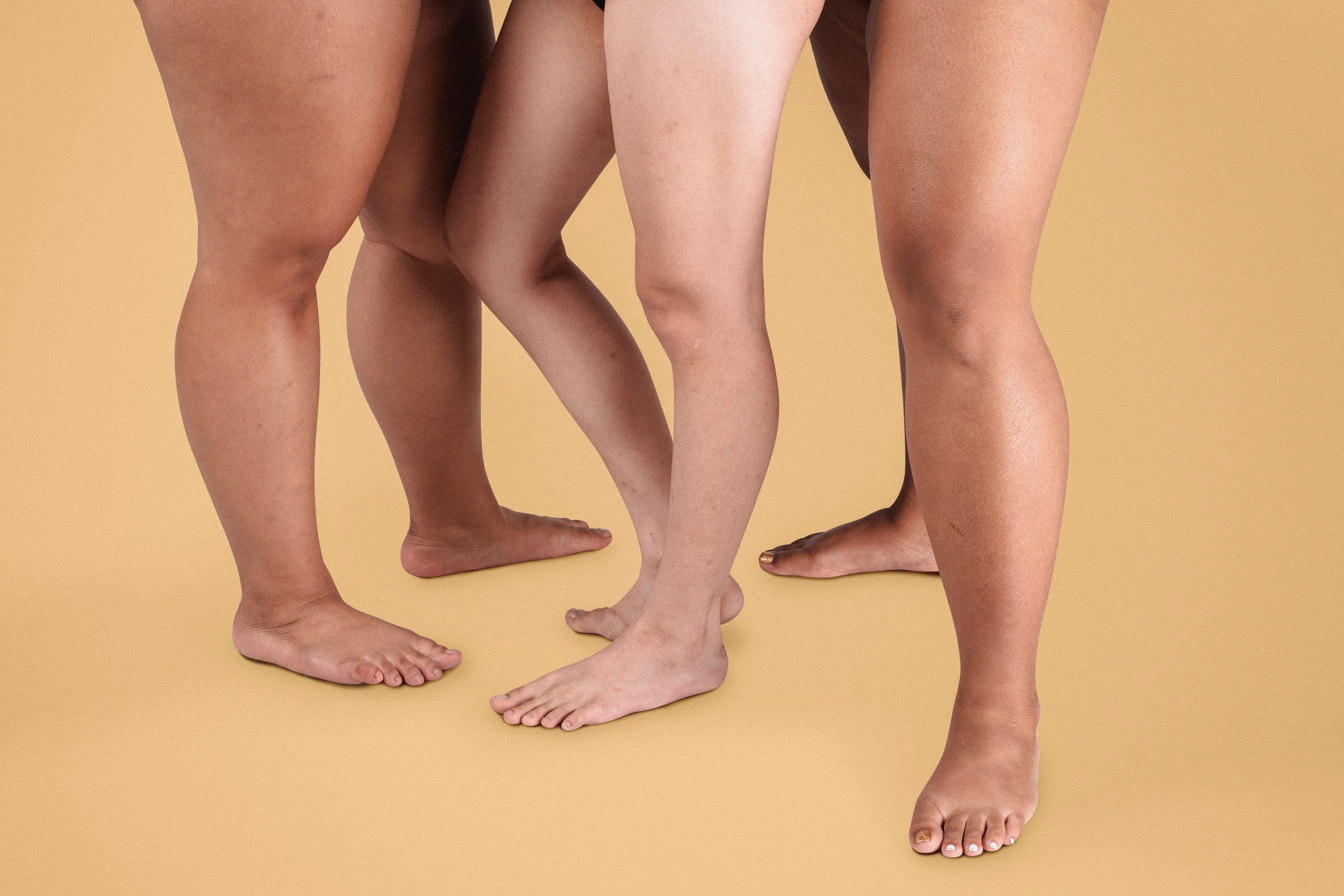
An open letter to anyone stamping a medical seal of approval on women who need medical care.
This one goes out to all the doctors going viral with it, the health reporters writing it up as settled science, and to Harvard Health, whose publications should be worth the trust its name commands.
A leg can be large for all sorts of reasons, and "thick thighs save lives" is built on the two harmless ones: across a population, lower-body fat is easier on the heart than the fat around the organs, and trained leg muscle is genuinely protective. Both true. The other reasons are diseases, and one of them, lipedema, affects an estimated 400 million women worldwide. The slogan bypasses that inconvenient truth, and not without major mental and physical health consequences.
A tape measure reads the same on a sprinter's quad and on a leg with lipedema, lymphedema, or Dercum's disease. Anywhere else in medicine, a growing limb is a swelling, and everyone understands the assignment: you find out why it's happening before you say a word. Nobody gives a pregnant-looking stranger their seat on the train anymore because we all know that guessing what’s inside a woman's body from the outside is a fast way to be wrong and humiliated. Given that, how could it be that the slogan "thick thighs save lives" reached such popular heights?
Say what you mean. The science measured the outside of a leg; the slogan cast a long shadow of assumption about the inside. Did anyone stop to ask what was in there? Muscle, fibrosis, inflammatory fat, or is it all the same to the slogan?
Harvard has been saying it since 2012, in a men's health newsletter and a free article suggesting to readers that lower body fat "may actually be a friend to health," maybe even why women outlive men. Further down, the same article admits the scientists "measured thigh size but not thigh composition," that nobody "can tell if the apparent protection of big thighs is due to more muscle, more fat, or both." The caveat and the headline ran on the same page, but only the headline took off. Harvard Health reaches an estimated 50 million people a year.
And Harvard is not the only one. A doctor with millions of followers calls thick thighs metabolic medicine. He means muscle, the kind you build by training, and about that he is right. But the slogan says "thick," not "strong." A woman can have strong muscles and lipedema at the same time; thigh size alone cannot tell her which tissue accounts for that size or whether her symptoms need evaluation. Worse still, lipedema tissue is fibrotic and firm, hard to pinch and easy to mistake for muscle, so the woman who has it feels something solid in her legs and believes him. Even if only half his followers are women, an estimated 140,000 of them have lipedema, mistaking their own disease for the strength he is selling. The health press says science supports it. A generation ago, the insulting term for these legs was "thunder thighs." Tyra Banks reclaimed it as a compliment. Either way, women's legs are appraised on sight and examined by nobody. You can buy the slogan's words on a pair of leggings on Etsy, stretched over the exact swelling they tell women to celebrate. The irony is … thiq.
Lipedema is one of the diseases that a tape measure cannot see. The studies describe a different fat than the fat in those legs; the protective kind is metabolically active and stores fat safely, while lipedema tissue is fibrotic, inflamed, and resistant. The research does not say that ever-larger thighs mean ever-better health. A slogan should not invite that interpretation—or reassure a woman about symptoms the research did not explain. If you weren't 'talking about those women', you should have said so. 11% of women is too big a number to ignore.
And the reassurance arrives as a compliment, which is the cruel part. Women won't push back on "your body isn't just healthy, it's healthier than the skinny girls who pitied you. Pity them back." Your dismissal of their reality lands as a kindness, and they take it in. They learn to hear the ache and the heaviness and the bruising as ingratitude, as vanity, as superiority, as anything but a symptom. They do everything they're told and the legs never match the rest, so they decide they are the failure and bear down harder. About two in five end up with depression, one in six with an eating disorder. Through your rhetoric, you offer reassurance that thigh size alone cannot justify.
Understand me: I am not against women loving their legs. But they deserve to know those legs before they're told to love them and chalk them up to good health. You weighed in, so part of this is yours now, whether you meant it or not. These women are already behind, because their own doctors often don't recognize lipedema, and maybe, until now, you didn't either. So before you say it again, learn what lipedema is and what it costs the 11% of your female followers and readers who now believe that their thick, lipedema-affected thighs are healthy.
#ThighLiesHarmLives
Sources: The protective association of lower-body fat is from Manolopoulos, Karpe, and Frayn, International Journal of Obesity (2010). The thigh-size finding the slogan rests on is Heitmann and Frederiksen, "Thigh circumference and risk of heart disease and premature death," BMJ (2009), a Danish cohort whose protective signal came from tape-measured thigh circumference. Harvard's claims and its own caveat that the studies "measured thigh size but not thigh composition" are in "Thick thighs may protect health" (Harvard Men's Health Watch, 2012) and "Big thighs may be wise" (Harvard Health Publishing, 2012), both still live. "Metabolic medicine" is Dr. Kunal Sood (@doctorsoood), reported by the Hindustan Times (Feb 2026). The "science supports the slogan" headline is IOL (Nov 2025). The estimate that lipedema affects roughly 400 million women, about one in nine, is from Buck and Herbst, Plastic and Reconstructive Surgery Global Open (2016). That lipedema's fibrotic tissue is firm and can be mistaken for muscle is documented by Tactile Medical and the Lymphatic Education & Research Network. Depression and eating-disorder rates in women with lipedema are reported across the lipedema psychology literature. Renaissance tour figures are from Variety and Pollstar (2023). The "Thicc Thighs Saves Lives" yoga leggings are an Etsy listing (shop AS3DesignStudio).
Support this message by signing it below.
The more voices we have, the harder it will be for the medical industry to ignore.